
Designing an end-to-end digital pharmacy experience to expand access to medications in Ghana
~32%
faster prescription-to-order flow in usability testing
+12pt
lift in user confidence their order would be handled correctly
3
product surfaces shipped end-to-end in 18 weeks
Client
Aide Chemist
Year
2024
My Role
Lead Product Designer
Team
Managed 2 UX designers
1 Software engineer
1 Front end developer
Timeline
16-20 weeks
Overview
Momentum is an Android pharmacy app built for Aide Chemist, a leading pharmacy in Ghana, to expand access to healthcare products and services beyond their physical locations. I led the product as the sole senior designer: setting the vision and design system foundation, directing a team of two UX designers through execution, and staying accountable for quality across three distinct product surfaces: the consumer-facing app, an internal operations console for pharmacists, and a driver interface for last-mile delivery.
This was the kind of project where design leadership mattered as much as design craft. I had to make fast, confident decisions about product direction while enabling two other designers to execute without bottlenecking on me. The full product shipped to the Ghanaian market in 18 weeks.
The Problem
Aide Chemist had deep trust with their customers built over years of in-person service. The design challenge wasn't just building a functional app — it was replicating the reassurance of a trusted pharmacist in a digital product, for users who had little or no experience with digital healthcare tools. Adoption depended entirely on getting that right.
The complexity wasn't just on the consumer side. Behind every order was real operational infrastructure: inventory management, prescription verification, fulfillment workflows, and last-mile delivery. Weak ops tooling would directly undermine the customer experience — a confirmed order that didn't arrive reliably would erode trust faster than any UX friction. Designing the ops console and driver interface wasn't a secondary workstream; it was what made the consumer promise credible.
Users
Primary users were patients and customers (many of them first-time digital pharmacy users) who needed a low-friction way to order medications, manage prescriptions, and get support when questions came up. Research identified four priorities that would determine whether they'd adopt and return: stock availability, convenience, price transparency, and reliable prescription management.
Operational users included pharmacists managing incoming orders, prescription verification, and fulfillment; and drivers handling last-mile delivery. Both groups needed tooling fast and reliable enough to hold up under real workload — not a polished UI that fell apart when orders stacked up.
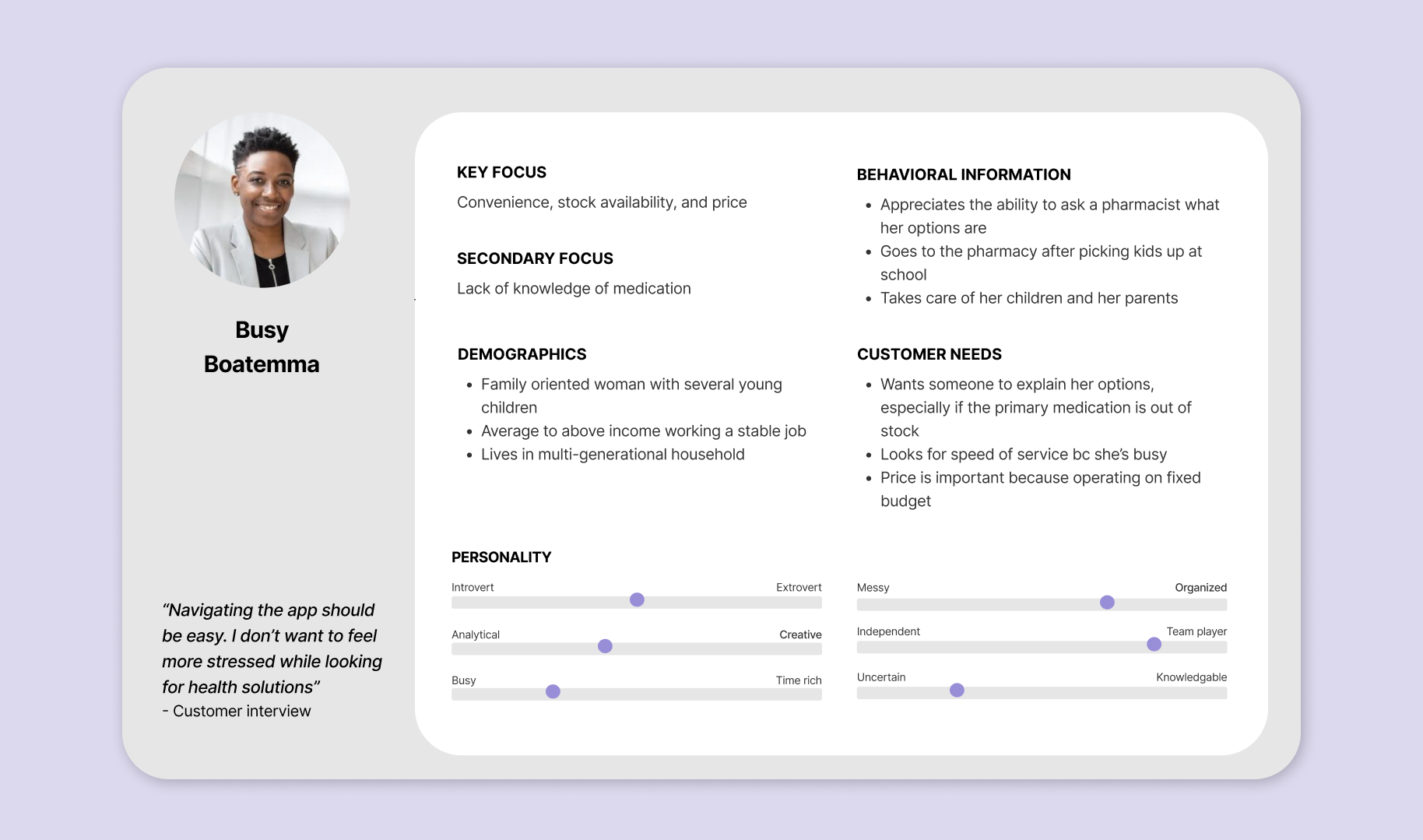
Mapping distinct needs across customers to prioritize features.
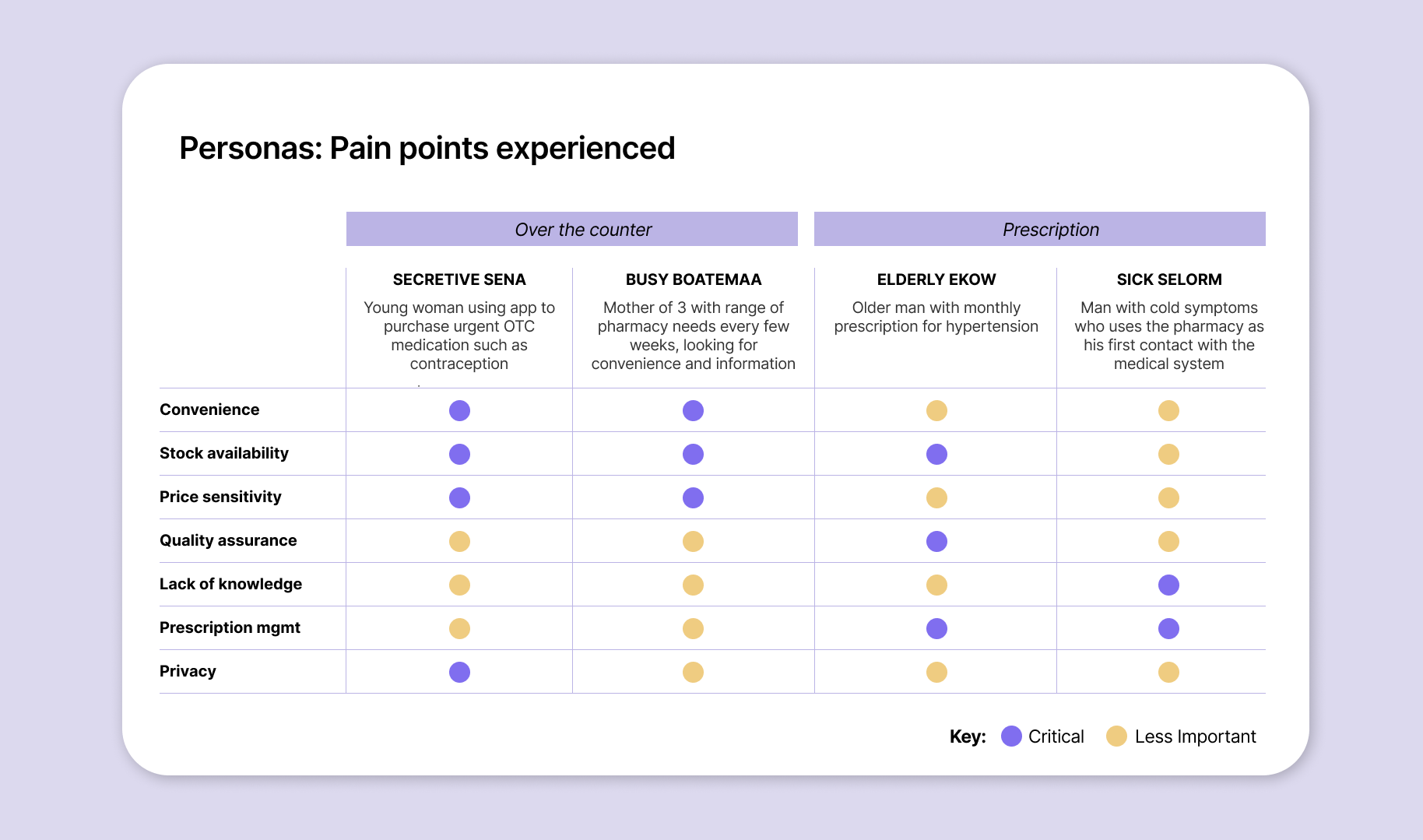
Identified priorities: stock availability, convenience, price and prescription managment.

Home experience designed for quick access to search, promotions and reorders.
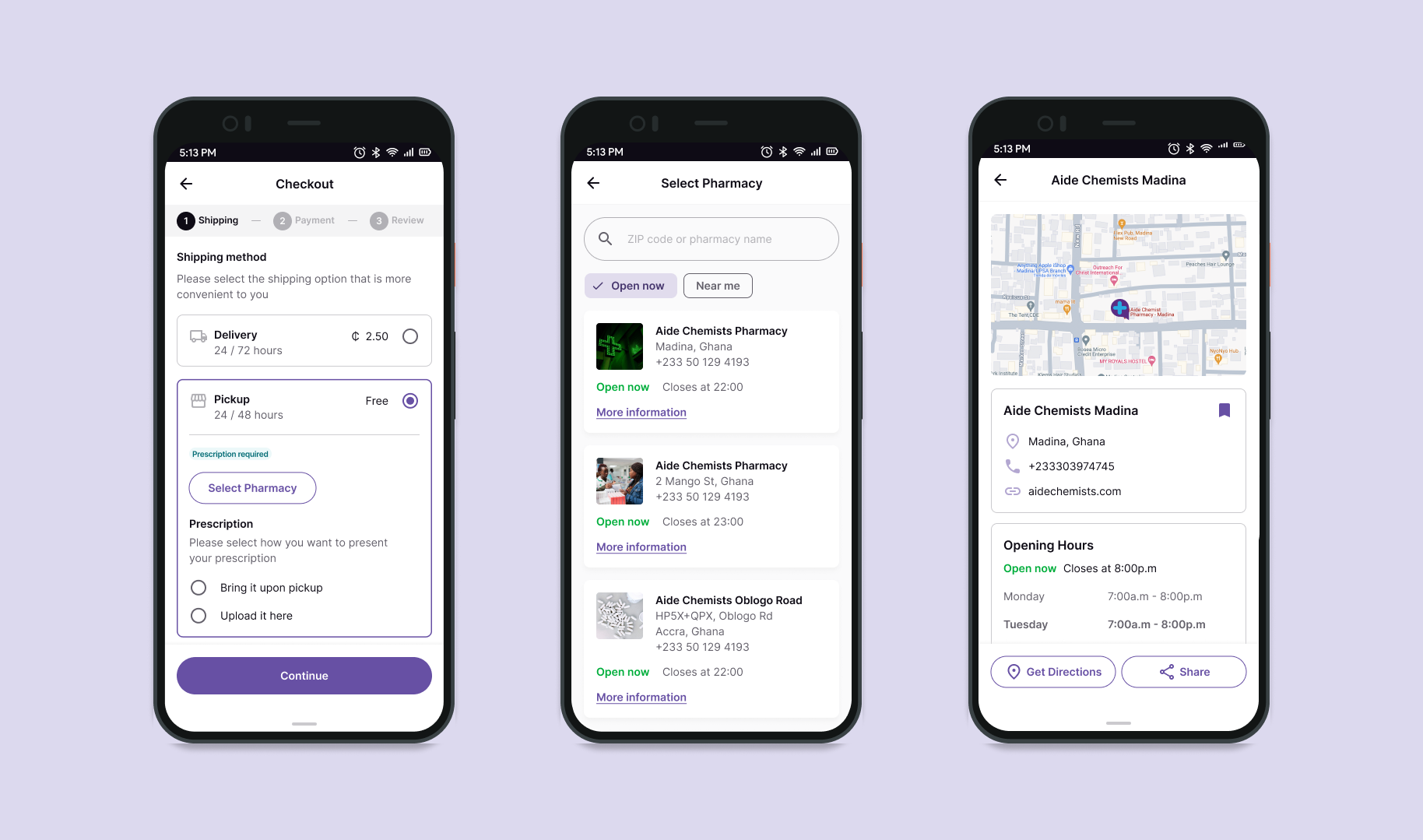
Checkout flow allows users to select shipping/pickup at pharmacy options.
Designed the ops console pharmacists rely on to triage orders, verify prescriptions, and track fulfillment end-to-end.
Design Process
Setting the foundation
Established the design system before execution began
Before briefing the team, I built the component library, token system, and core patterns that would govern everything downstream. This enabled two designers to work in parallel without creating conflicts that would slow engineering down later. I reviewed their work against the system throughout, catching drift early rather than at handoff.
Grounded the MVP in research before touching UI
We ran discovery with target users to map the gap between offline pharmacy behavior and what a digital product would need to replicate. The output prioritized feature set with a clear rationale for what made the MVP "stick": fast delivery, recurring prescription refills, pharmacist support, and flexible pickup. Everything else was explicitly deferred.
Consumer app
Built the core pharmacy loop end-to-end
The consumer experience centered on the repeat behaviors that make a pharmacy app valuable over time: prescription uploads, on-demand ordering, subscription-based refills, and account personalization. I designed flows for each and set quality standards the team used to execute the supporting screens without needing me to review every state.
Made pharmacist support feel human, not transactional
For users transitioning from an in-person pharmacy, the most important trust signal was knowing a real pharmacist was accessible. I designed the support experience to mirror the guidance users were used to — approachable, clear, and responsive — rather than defaulting to a help center pattern that would have felt cold and unfamiliar.
Operations console & driver interface
Designed the ops console pharmacists rely on to triage orders end-to-end
The internal console gave pharmacists a single place to manage incoming orders, verify prescriptions, track fulfillment status, and handle exceptions without back-and-forth across disconnected tools. Key patterns included search, filter, and sort for high-volume order triage; a unified order detail view combining patient info, prescription verification, and delivery status; and structured status controls with audit history so critical changes stayed traceable across shifts.
Built a driver interface for reliable last-mile delivery
The driver app was designed for on-the-go use under time pressure. It included minimal steps, clear assignment-to-delivery flow, and built-in confirmation states so completed deliveries were logged accurately. Reliable delivery execution was a direct input to customer satisfaction, so this surface got the same design rigor as the consumer app.
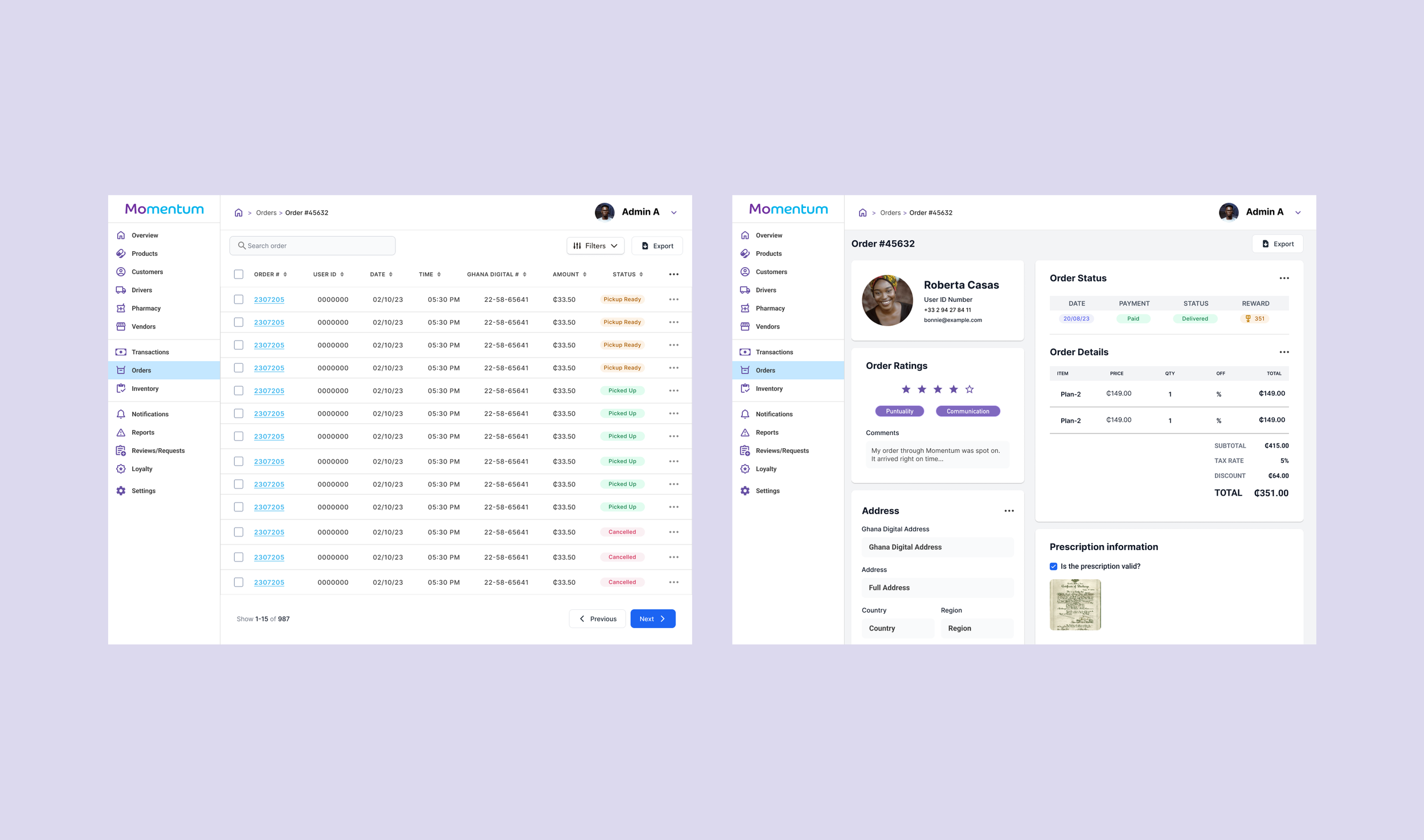
Admin can drill into an order to view customer details, payment/status, and prescription verification.
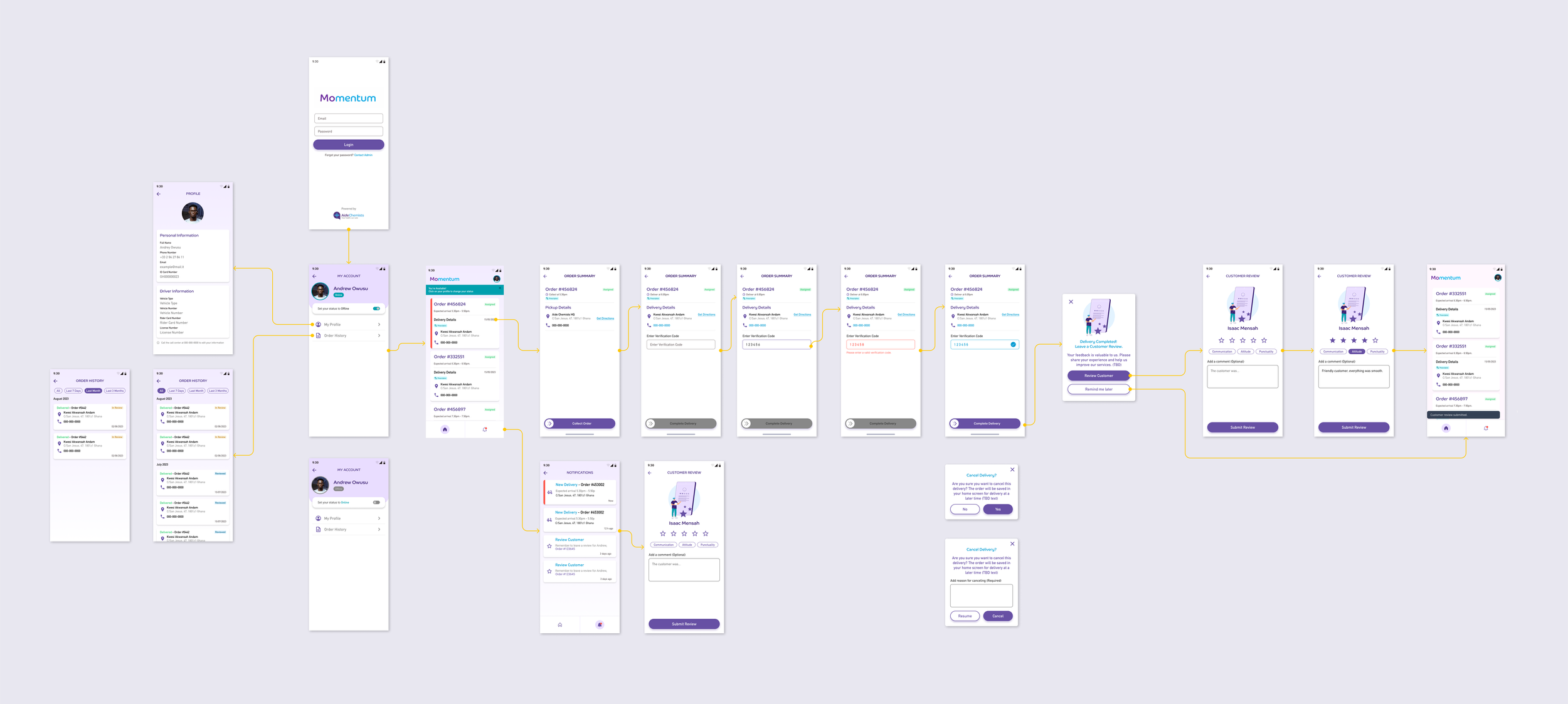
Driver app flow, clear path from assignment to delivery to completion (customer feedback).
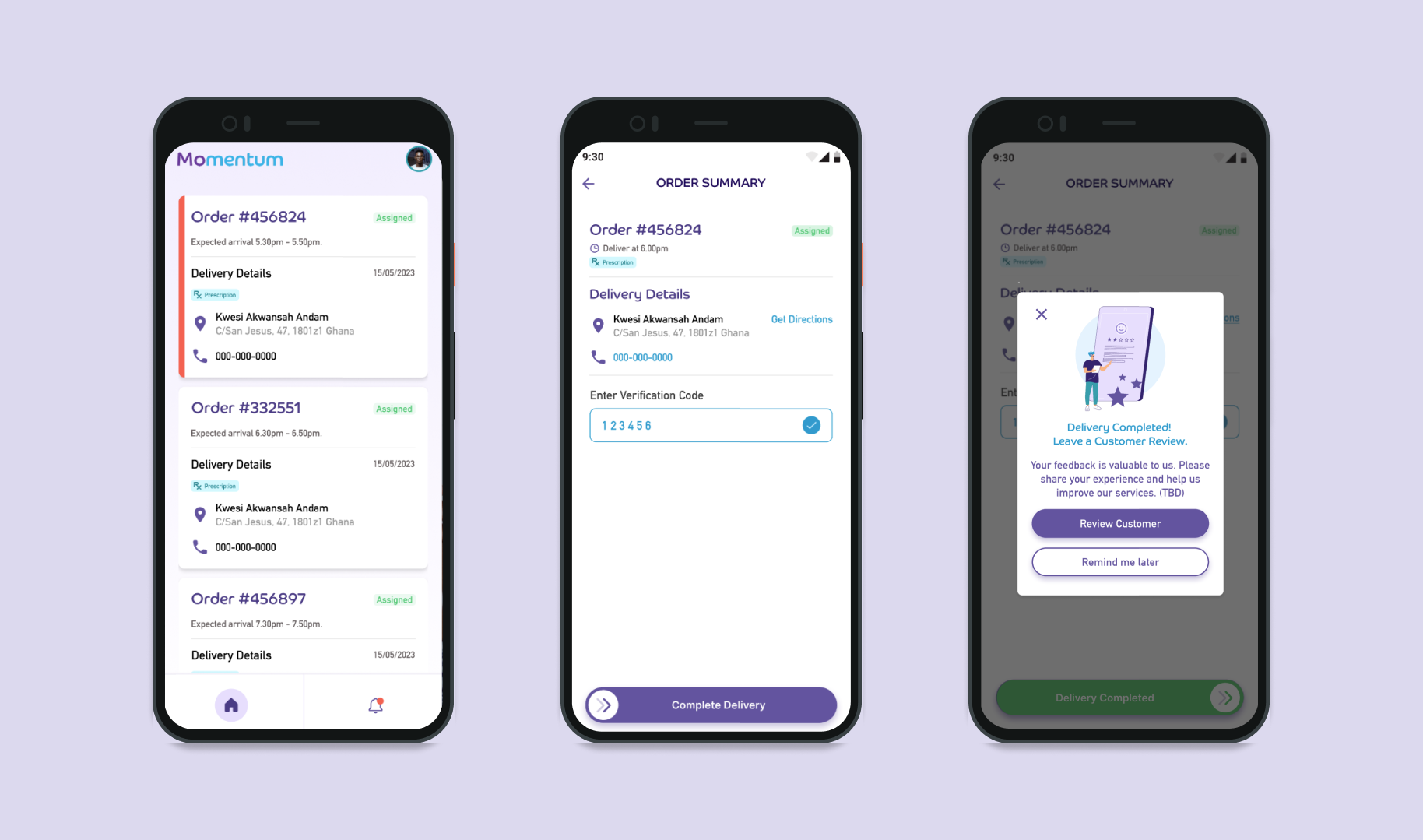
Streamlined driver UI built for on-the-go use, minimizing steps while ensruing accurate delivery.
Outcome & Impact
Momentum shipped to the Ghanaian market in 18 weeks as a full-stack digital pharmacy: consumer app, operations console, and driver interface all delivered end-to-end. The product covered the complete pharmacy loop — prescription uploads, on-demand ordering, subscription refills, account personalization, and pharmacist support — designed to feel as trustworthy as an in-person visit. Within months of launch, it showed early signs of becoming a genuine digital extension of a trusted pharmacy brand.
Speed:
Users completed the "upload prescription → place order" flow ~32% faster in usability testing after the redesigned flow, driven by clearer guidance and fewer steps.Confidence:
Post-task ratings showed a +12-point lift in user confidence their prescription or order would be handled correctly — the clearest signal the trust problem was solved.Retention signals:
Subscription-based refills and streamlined prescription management supported repeat behavior instead of one-time orders, suggesting the product was building habit, not just handling transactions.
Ops reliability:
Inventory and fulfillment workflows reduced manual coordination across the pharmacy team, strengthening end-to-end delivery execution from order placement to doorstep.